Filter by

BIRDS: YOUR PET AT HOME AND IN THE WILD
"Describes how to care for a pet bird, compares types of birds, and discusses wild bird behavior as compared to domestic birds in order to help readers decide if a bird is the right pet for them"--Provided by publisher.
- Edition
- -
- ISBN/ISSN
- 978-1-4451-0541-3
- Collation
- 32 p ; 27 cm
- Series Title
- -
- Call Number
- 591 MOR b c.1 2024110259

LIFE CYCLES: DUCKS AND OTHER BIRDS
Why do ducks sit on their eggs? Why do ducks have webbed feet? Can all birds fly? A duckling starts life in a hard-shelled egg, feeding on the yellow yolk. When it hatches, the fluffy duckling is ready to run around and find its own foo right away. Other birds have a similar life cycle, but songbirds hatch naked and helpless, and have to be fed by their parents while they grow.
- Edition
- -
- ISBN/ISSN
- 1-930643-44-6
- Collation
- 32 p ; 29 cm
- Series Title
- -
- Call Number
- 598.4 MOR l c.1 2024110225

LOOK AROUND YOU: RIVER
This title provides an introduction to rivers in the local environment with ideas for activities and investigations.
- Edition
- -
- ISBN/ISSN
- 978-0-7502-5143-3
- Collation
- -
- Series Title
- -
- Call Number
- 910.9 THO l c.1 2024110035

THE LIFE CYCLE OF AN OWL
Describes the physical characteristics, habits, life cycle, and natural environment of the owl.
- Edition
- -
- ISBN/ISSN
- 978-0-7502-6676-5
- Collation
- 24 p. ; port. ; 25 cm.
- Series Title
- -
- Call Number
- 598 THO t c.1 201860306
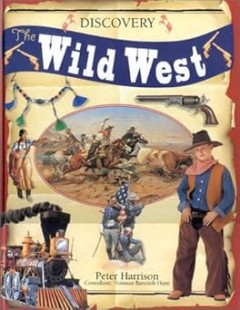
THE WILD WEST
Examines the Wild West from the time European settlers first encountered the land and native peoples in the 1600s to the late 1800s, exploring the changing lives of Native Americans, women, cowboys, lawmen, and outlaws.
- Edition
- -
- ISBN/ISSN
- 978-1-84477-723-5
- Collation
- 64p. : col. ill,maps,ports. ; 22 cm.
- Series Title
- -
- Call Number
- 978 HAR t c.1 201860050

LIFE CYCLES: FOREST
In this series that covers all of Earth's key habitats, each book reveals the life cycles of eleven animals which link together to create three different food chains. At the end of the book a simple overview helps readers understand how the three food chains interact to create a food web-the perfect first introduction to this core science concept. The world's forests are rich habitats that supp…
- Edition
- -
- ISBN/ISSN
- 978-0-7534-6741-1
- Collation
- 32 p. ; col. Ill. ; 1 col. Map ; 28 cm.
- Series Title
- -
- Call Number
- 577 CAL l c.1 201930286


LIFE CYCLES: DESERT
Because the harsh environment of the desert makes resources scarce, the animals that make their home in the world's driest environments are intimately interconnected. This highly-visual title explores three desert food chains in three of the globe's driest regions: the Kalahari in Africa, the Australian Outback, and the Mojave Desert in the US Southwest. Along with a clear explanation of each l…
- Edition
- -
- ISBN/ISSN
- 978-0-7534-6811-1
- Collation
- 32 p. ; col. Ill. ; 26 cm.
- Series Title
- -
- Call Number
- 591.754 CAL l c.1 201930272

LIFE CYCLES: POLAR LANDS
Although they are deceptively stark, the world's Polar Regions support a surprisingly diverse range of wildlife. Life Cycles: Polar Lands by Sean Callery explores how ten of these creatures from both poles―including the arctic fox, the polar bear, the ringed seal, and the arctic tern―are all interrelated in three polar food chains. Along with a clear explanation of each lifecycle, the book …
- Edition
- -
- ISBN/ISSN
- 978-0-7534-6691-9
- Collation
- 32 p. ; col. Ill. ; col. Maps ; 27 cm.
- Series Title
- -
- Call Number
- 591.7 CAL l c.1 201930266

LIFE CYCLES: MOUNTAIN
The unique challenges of living in the world's highest places require special adaptations to survive and thrive, from the lowest animals on the food chain like the mosquito and the earwig, right through fascinating top level predators like the elusive snow leopard and the wolverine. Life Cycles: Mountain by Sean Callery examines three food chains in the globe's highest regions: the Andes of Sou…
- Edition
- -
- ISBN/ISSN
- 978-0-7534-6810-4
- Collation
- 32 p. ; col. Ill. ; col. Maps ; 27 cm.
- Series Title
- -
- Call Number
- 591.7 CAL l c.1 201930265
 Computer Science, Information & General Works
 Philosophy & Psychology
 Religion
 Social Sciences
 Language
 Pure Science
 Applied Sciences
 Art & Recreation
 Literature
 History & Geography