Filter by

Your Voice, Your Choice: Understanding Consent
This child-friendly book introduces the concept of consent through realistic everyday situations. Children learn that they have a choice about whether to give or deny permission, how to recognise when they feel uncomfortable or unsafe, and how to respect other people's boundaries.
- Edition
- -
- ISBN/ISSN
- -
- Collation
- -
- Series Title
- -
- Call Number
- 823 TWI y

The Forest School Creature
Fraser loves making mud potions at Forest School. One day, he accidentally spills his potion onto a mysterious glowing flower, causing something magical to happen. A friendly creature named Flora emerges, and Fraser and Flora work together on Forest School challenges such as creating nature art and building bug hotels—all while trying to keep Flora hidden from the grown-ups.
- Edition
- -
- ISBN/ISSN
- -
- Collation
- -
- Series Title
- -
- Call Number
- 823 TWI t
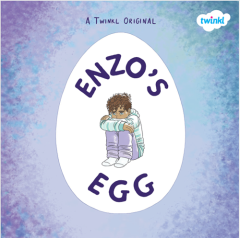
Enzo's Egg
Enzo retreats into his egg whenever life becomes too difficult. It becomes a safe place where he can cry, shout, think, or simply be alone. His family and friends want to help but struggle to understand what he needs. His friend Tess eventually realises that patience, kindness and empathy are what Enzo needs most.
- Edition
- -
- ISBN/ISSN
- -
- Collation
- -
- Series Title
- -
- Call Number
- 823 TWI e

Dance to the Hatching Beat
In a colourful jungle setting, different animals gather as parrot chicks prepare to hatch from their eggs. Children follow the sounds of tapping, cracking and scratching while joining the animals in a fun “hatching beat.” The story uses rhyme, repetition, movement and body percussion to encourage children to clap, tap, shuffle and stamp along.
- Edition
- -
- ISBN/ISSN
- -
- Collation
- -
- Series Title
- -
- Call Number
- 823 TWI d
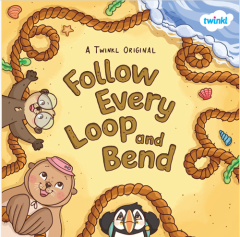
Follow Every Loop and Bend
Three friends—a puffin, sea lion, and sea otter—discover a mysterious rope on the beach. Curious about where it leads, they follow it along the seaside, past seagulls, a lighthouse, caves, and under the sea, until they discover what is at the end. The story uses rhyme, repetition, and action words to encourage young children to join in.
- Edition
- -
- ISBN/ISSN
- -
- Collation
- -
- Series Title
- -
- Call Number
- 823 TWI f
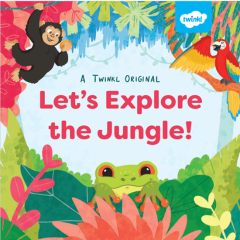
Let's Explore the Jungle!
This colourful early-learning book introduces children to different jungle animals, including elephants, chimpanzees, snakes, frogs, leopards, parrots, lizards, monkeys, tigers, and sloths. Each animal is shown doing an action that children can imitate, helping develop animal vocabulary, movement, and early language skills.
- Edition
- -
- ISBN/ISSN
- -
- Collation
- -
- Series Title
- -
- Call Number
- 823 TWI l

Wombat's Picnic: A Fractions Dilemma!
Wombat is looking forward to enjoying a quiet picnic by himself, but several hungry Australian animals arrive and want to share his damper. Wombat must work out how to divide the food fairly, introducing children to fractions such as 1 whole, ½, ¼, and ⅛ through an engaging story.
- Edition
- -
- ISBN/ISSN
- -
- Collation
- -
- Series Title
- -
- Call Number
- 823 TWI w

Ten Little Lights
On a cold winter night, woodland animals are drawn towards a warm, cosy house in the snow. As each animal approaches, another light appears in the house, gradually building up to ten little lights. Children can follow the story while practising counting to 10 and learning about woodland animals.
- Edition
- -
- ISBN/ISSN
- -
- Collation
- -
- Series Title
- -
- Call Number
- 823 TWI t

The Perfect Ribbit
The Perfect Ribbit follows Tapple, a young tadpole who is excited to grow into a frog. He tries hard to make the perfect “ribbit” like the adult frogs, but keeps making the wrong sounds. As Tapple grows through the stages of the frog life cycle—from frogspawn to tadpole, froglet, and finally frog—he learns about growing, changing, and not giving up.
- Edition
- -
- ISBN/ISSN
- -
- Collation
- -
- Series Title
- -
- Call Number
- 823 TWI t

Let's Explore Under the Sea!
This colourful early-learning book introduces young children to a variety of sea creatures, including dolphins, sharks, seahorses, turtles, crabs, and stingrays. Each page combines the animal's name with a simple action, helping children develop vocabulary and early language skills while learning about life under the sea.
- Edition
- -
- ISBN/ISSN
- -
- Collation
- -
- Series Title
- -
- Call Number
- 823 TWI l
 Computer Science, Information & General Works
  Philosophy & Psychology
  Religion
  Social Sciences
  Language
  Pure Science
  Applied Sciences
  Art & Recreation
  Literature
  History & Geography